The Quiet Architecture of the Arctic Archipelagos
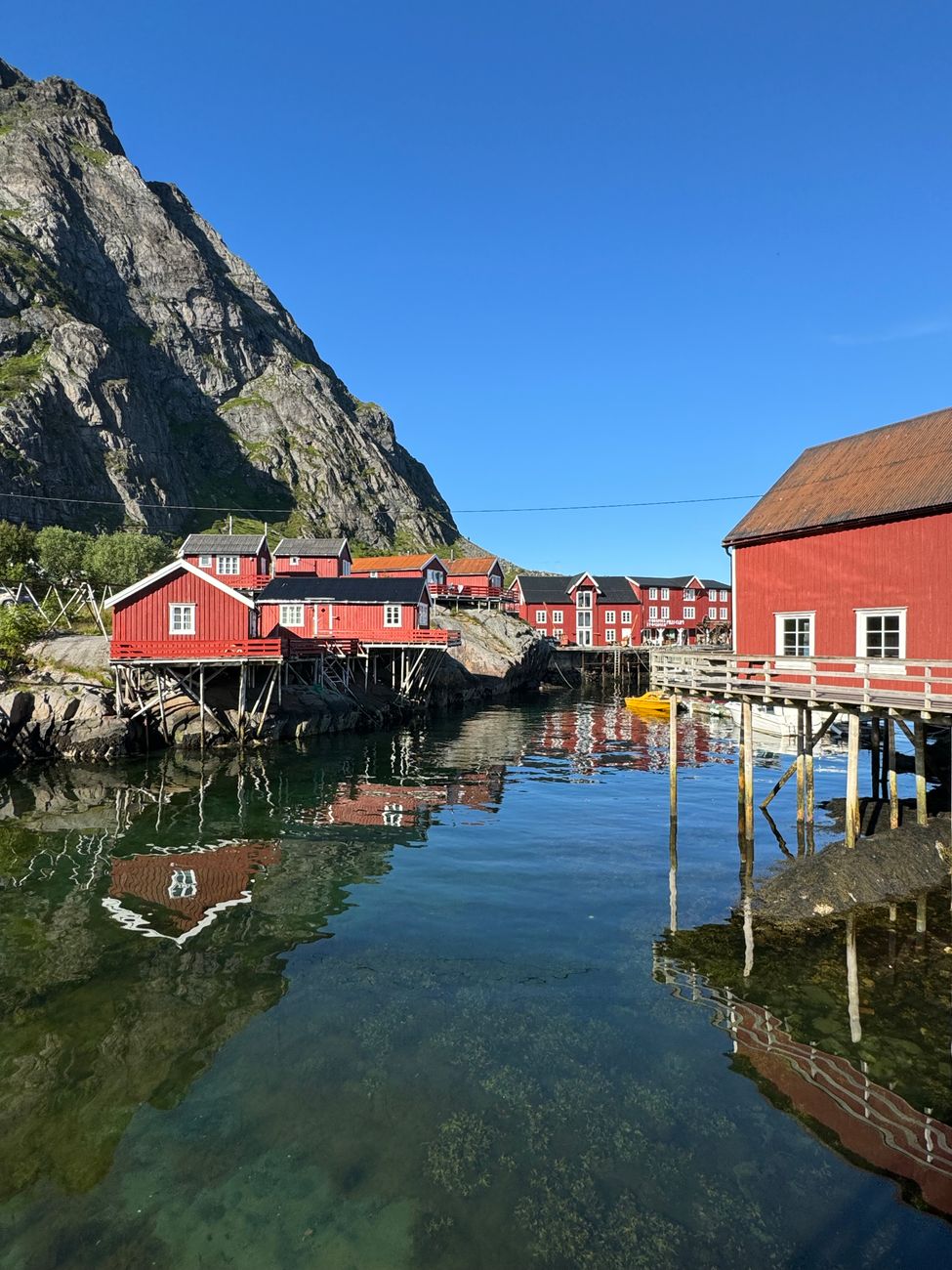
"To arrive in the Lofoten archipelago during the blue hour is to understand silence not as the absence of noise, but as a tangible physical presence."
The Red Rorbu and the Granite Fjords
For centuries, the traditional Norwegian fisherman cabin—the rorbu—stood upon poles driven directly into the rocky shoreline. Clad in falu red paint derived from iron oxide and cod liver oils, these utilitarian shelters were built to withstand gale-force Arctic squalls while offering warm shelter to coastal tradesmen.
Today, these timber buildings have evolved into sanctuaries of mindful design. Minimalist interiors preserve rough-hewn pine beams and wood-burning stoves, juxtaposing harsh Arctic weather with profound interior comfort (known locally as hygge).
Sustainable Sea Harvests
Life in the archipelago remains intimately bound to the skrei—the migratory Arctic cod that travels thousands of nautical miles from the Barents Sea each winter. Drying racks (hjell) dominate the coastal skyline, naturally curing fish under cold winds without energy consumption, preserving a trade established over a millennium ago.
Editorial Field Note
When traveling north of the Arctic Circle between November and February, natural sunlight is restricted to a prolonged twilight. Travelers should plan excursions within the 10:00 to 14:00 window and prioritize micro-cleats for icy coastal paths.
The Philosophy of Arctic Slow Travel
Rather than rushing between photo hotspots, the real magic of this region unfolds when staying in one location for a full week. Walking along wave-swept pebble beaches at Unstad, observing sea eagles circling granite crags, and savoring hot cloudberry desserts around an open hearth reframe one's relationship with pace and landscape.
Planning an Arctic Itinerary?
Let our travel researchers formulate an authentic Nordic retreat adapted to your rhythm.